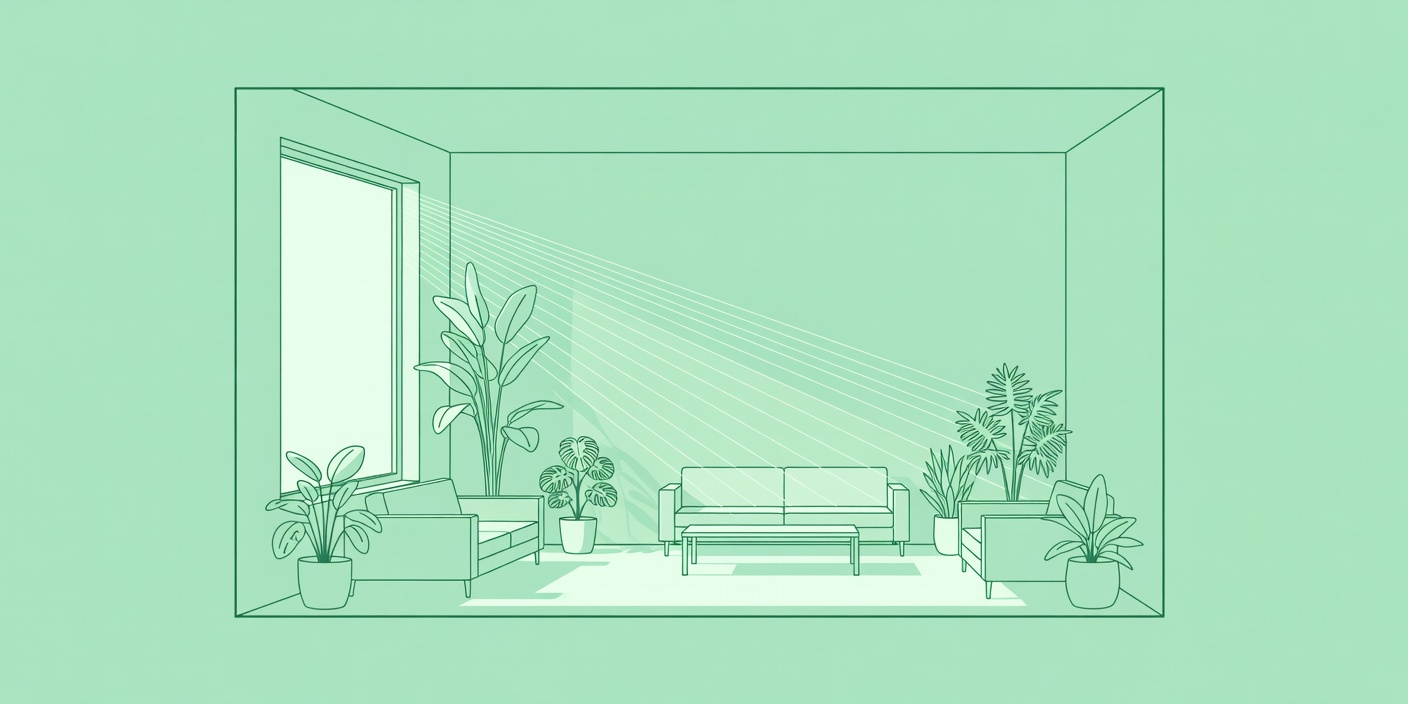
Daylight is the first design material in an indoor garden. It is also the material most easily misread. Our eyes adapt quickly to a dim interior; a plant cannot make the same accommodation without consequences for growth.
Before considering a large specimen, spend time with the actual room. Record where light reaches at different hours, what filters it and how far the proposed planting sits from the glass. A floor plan can establish a direction, but only observation reveals the influence of a balcony above, a neighbouring wall or a mature tree outside.
Start at the window, not the compass
In Ireland and much of the northern hemisphere, a south-facing window often receives stronger direct sun than a north-facing one. East-facing rooms commonly receive morning sun; west-facing rooms can experience warmer afternoon exposure. These are starting points, not guarantees. Local obstructions and seasonal sun angles can reverse expectations within an individual home.
Glazing matters too. Tinted glass, solar-control coatings, insect screens and curtains can reduce the light reaching foliage. A double-height room may look luminous while its intended planting pocket remains shaded beneath a mezzanine. Record the position of the leaves, rather than simply noting that the room has large windows.
Observe a whole day, then revisit
Make a simple plan and mark the proposed plant positions. On a representative day, note direct sun, diffuse brightness and deep shade in the morning, around midday and later in the afternoon. Repeat during contrasting weather. Photographs taken from the same position are useful records, although automatic exposure makes them unreliable as measurements of intensity.
Repeat the exercise in another season before making an expensive built-in commitment where possible. Winter sun may penetrate further into the room while the total daily light remains lower. Deciduous trees can open a view in winter and heavily shade the same window in summer. The relevant question is not whether a position is bright once, but whether it supplies an appropriate daily light environment over time.
| Observed condition | What to investigate | Design response |
|---|---|---|
| Strong afternoon sun | Leaf temperature, duration and seasonal glare | Acclimatise plants and consider adjustable screening |
| Bright, filtered window light | Distance from glass and consistency through winter | Match species to measured conditions |
| Deep room or internal corner | Whether usable plant light is sufficient at all | Move planting or assess dedicated grow lighting |
| Roof glazing | Summer heat, access and uneven exposure | Coordinate shade, ventilation and maintenance |
Measure when the decision deserves it
A handheld light meter can help compare positions, but lux describes brightness as weighted for human vision. Plant lighting is more usefully assessed with photosynthetic photon flux density, or PPFD, and the accumulated daily light integral, or DLI. These measures need interpretation for the species, duration of exposure and equipment being used.
A phone application can support preliminary comparisons, but its accuracy depends on the device, sensor, calibration and method. Do not treat a single reading as a horticultural prescription. For a valuable collection, a large atrium or a permanent installation, ask a qualified horticultural or lighting professional to measure conditions and translate them into a planting brief.
Consider the leaf and the room together
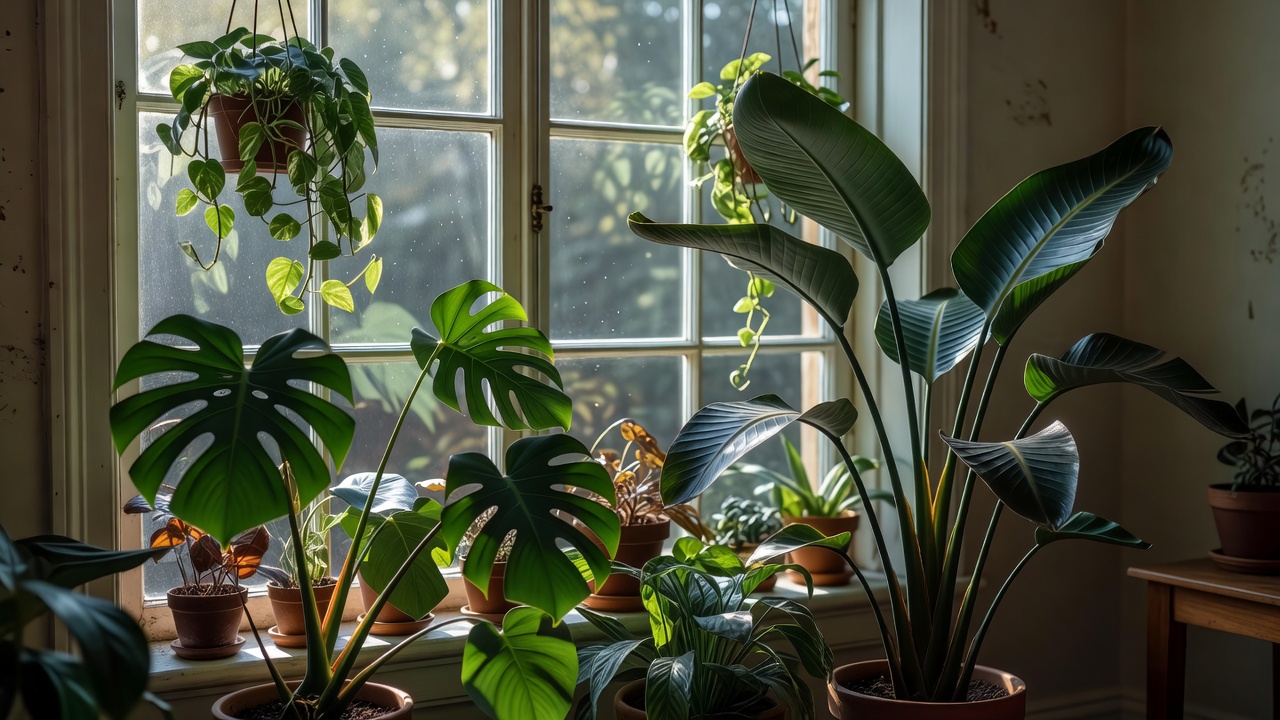
Light exposure interacts with temperature, water use and air movement. A plant beside glass can experience hot leaves on a sunny afternoon and a much cooler root zone overnight. Underfloor heating may warm a pot from below; an air-conditioning outlet can dry foliage from above. These conditions should be recorded alongside the light assessment rather than discovered after installation.
Keep a clear route to operate blinds and clean glazing. A planting composition that prevents use of a shade system undermines its own growing conditions. Similarly, a tall canopy should not block a sensor or prevent safe access to a roof vent.
Use supplementary lighting deliberately
Purpose-designed grow lights can extend the range of suitable positions, but a decorative spotlight is not automatically a substitute. Specify output, distribution, operating duration, heat management and safe installation. Consider how light spill will feel from a sofa or bedroom doorway, not only how the fitting appears in a reflected ceiling plan.
Control the system so plants receive an appropriate dark period. Ask the supplier for meaningful performance information at the actual mounting height. The Royal Horticultural Society’s houseplant guidance and the American Society for Horticultural Science offer useful starting points for further reading, but a room-specific assessment remains essential.
Practical note: prepare a daylight brief
Include window orientation, glazing details if known, approximate plant distance from the window, observed sun periods, seasonal obstructions and nearby heating or cooling outlets. Add photographs, but keep household security details out of anything shared publicly.
Once the constraints are clear, selection becomes more generous rather than less creative. You can compose a garden around conditions that genuinely exist, instead of maintaining an increasingly difficult illusion.
Continue to planting